Swahili Camp

The first day of camp is always a bit awkward. A beautiful park-like setting offsets the discomfort of sleeping in a strange bed. You tour the campus. You settle on a place to sit in the cafeteria. You recognize old familiar faces, and you introduce yourself to new friends. You bid your established routine farewell and embrace a new lifestyle, at least for a little while.


A Widely Spoken Language

For the last two weeks, I was a guest on the campus of the MS Training Center for Development Cooperation. Located near Arusha, Tanzania, MSTCDC has been operating a Swahili language immersion school since 1967. According to Wikipedia, over 200 million Swahili speakers live in the East African countries of Kenya, Uganda, the Democratic Republic of Congo, Burundi, Rwanda, Mozambique, and Tanzania.

As One Africa Team’s liaison to the LCMC-Kenya, I have been picking up Swahili words and phrases every time I’ve visited over the last two years. In addition, I’ve downloaded a Peace Corps Swahili language course and I listen to the audio recordings on my daily walk.

Until now, I’ve never taken a formal Swahili language course. Our mission team set the goal of missionaries acquiring the ability to work in two new languages. We identified French and Swahili because these are two of the most widely spoken languages on the continent of Africa. One Africa Team’s long-range vision is that in ten years, among our partners there will be over 200,000 communicants who regularly gather around Word and Sacrament and are shepherded by well-trained leaders.

swahili camp class
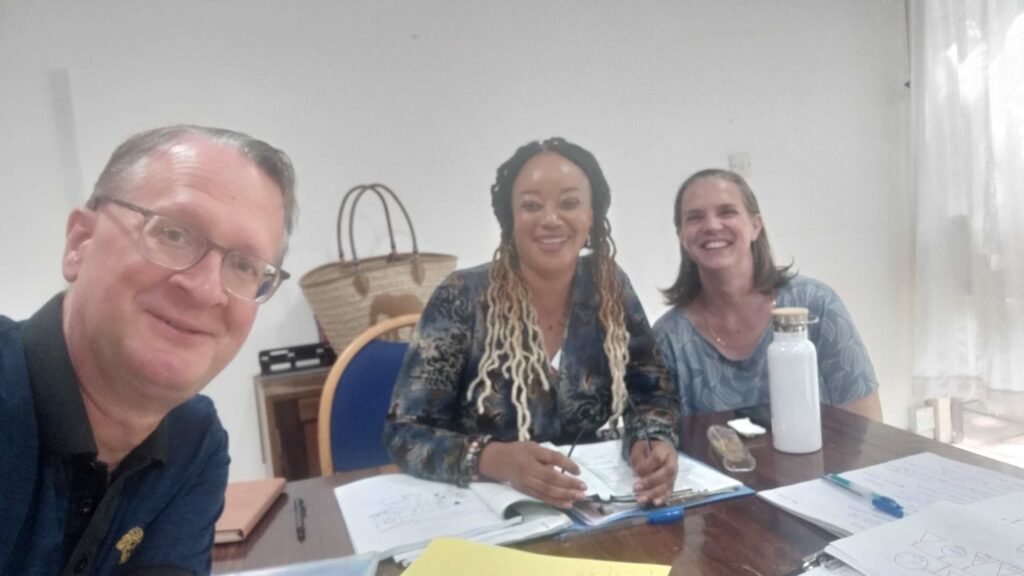
me, my Swahili teacher, and my fellow student

That’s how I found myself in Swahili camp. I enrolled myself in the intermediate level because I reckoned I was past the stage of learning greetings. Still, I found myself swimming, or drowning, in a strangely familiar yet different tongue. Swahili belongs to the Bantu family of languages. Grammatically and linguistically it is very similar to Chichewa, the language many people speak in Malawi.

However, during the Middle Ages, Arab traders interacted with the natives living in coastal cities of East Africa and Zanzibar. Between 20%-35% of the Swahili language is of Arabic origin. Every once in a while I stumble across a word I recognize from the time I spent on the Balkan Peninsula half a lifetime ago. I smile when I hear Swahili words like “faida,” “mzeituni,” and “bakshishshi” – these are words of Arabic origin that also entered Bulgarian conversational usage via the Ottoman Turks.

Boot Camp is Hard

Maybe you’re wondering why a fifty-five-year-old man is learning to speak a new language. Yes, it’s connected to my work responsibilities, but honestly, that is not adequate motivation. In most instances, I can get by with English or use a translator. Why have I invested so much time in learning to speak this foreign language (or any other)?

People open their hearts when they hear you struggling to string five words together in their native tongue. They recognize the effort you are making to understand their language, their culture, and their worldview. And when you speak through a translator, you lose the ability to connect to another human being directly.

swahlli camp
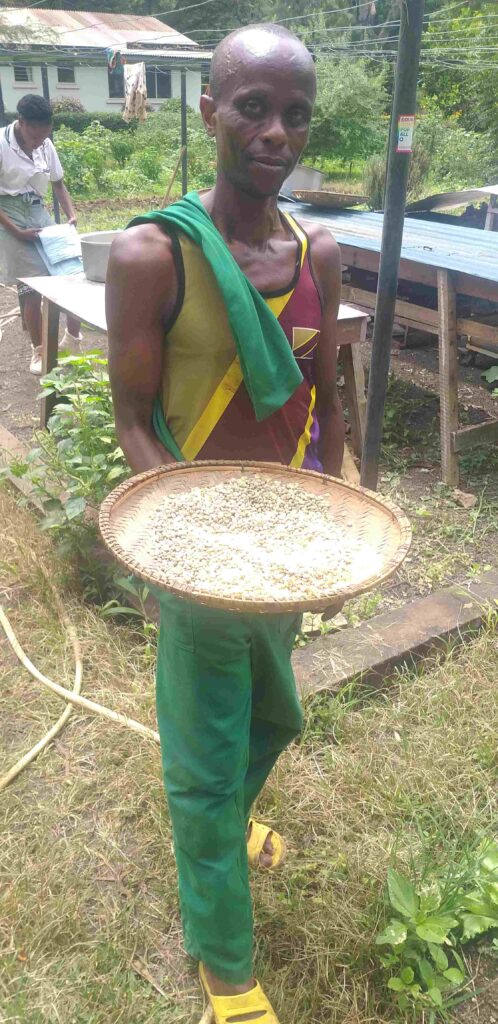
we interviewed this farmer to learn how coffee is grown on the school campus

God has given me both the ability and the interest to learn foreign languages. To whom much is given… I am putting myself in the uncomfortable position of talking at the level of a three-year-old. I dedicate my Swahili camp experience to God’s kingdom and glory.

Whether or not you speak a foreign tongue, the same principle is true. Sharing the good news of Jesus’ salvation with another human being requires humility. It requires us to listen before speaking. It means we strive to understand where someone is before we point him in the right direction. And it takes time.

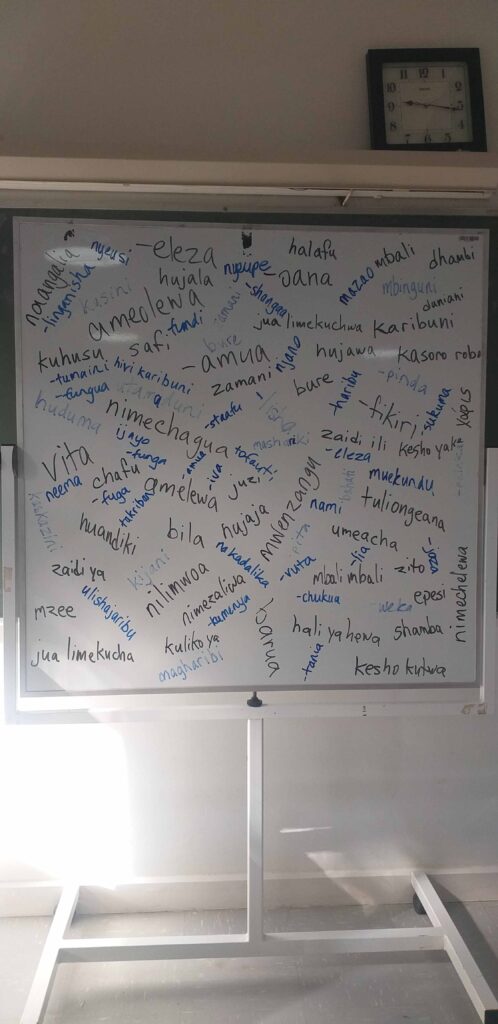
swahili camp
an exercise – not in futility, but in learning new vocabulary

These two weeks I’ve spent at Swahili camp is just another small step towards the realization of St. John’s vision of people from “every nation, tribe, people and language, standing before the throne and before the Lamb.” (Rev. 7:9) I don’t know what language we will be speaking in heaven, but God will have no trouble communicating his love for us all.

Amani ya Bwana nanyi (may the peace of God be with you)

Missionary John Roebke lives in Malawi.

Please pray for those working in fields that are ripe for harvest. Share their story, engage with future news, and receive updates. Learn more about our mission fields in Africa and how the Holy Spirit is working faith in people’s hearts at https://wels.net/serving-others/missions/africa


Tiptoeing into the Congo

Tiptoeing: it’s something my cat Magic does when she wants to go outside. She tiptoes to the threshold, noses around, and then suddenly bounds through the doorway and dashes off on the hunt.

For the past year, the One Africa Team (OAT) has been “tiptoeing” around the Democratic Republic of The Congo (DRC). I was called to Africa to connect with French-speaking church groups. As soon as I arrived in Africa, I was given an interesting French-speaking contact: a Lutheran pastor in the Democratic Republic of the Congo. This pastor soon put me in touch with his church group’s secretary-general.


For a year, we texted and talked on WhatsApp and email and eventually held regular bible studies on Zoom, along with the pastors and evangelists. This year, they formed their own synod, la Mission Évangélique Luthérienne au Congo (“Evangelical Lutheran Mission to The Congo”—MELC).

A Country with a Painful Past

Although Zambian and WELS pastors have made occasional, brief visits to The Congo, this hasn’t happened since the 1990s, and it has never happened using French. As the MELC began the process of exploring the path to church fellowship with the WELS, we at OAT felt it was important to visit our friends. After getting approval for the trip and taking some special precautions, Missionaries Howard Mohlke and Keegan Dowling (me) flew to Lubumbashi, DRC, for face-to-face meetings with the leaders of MELC.

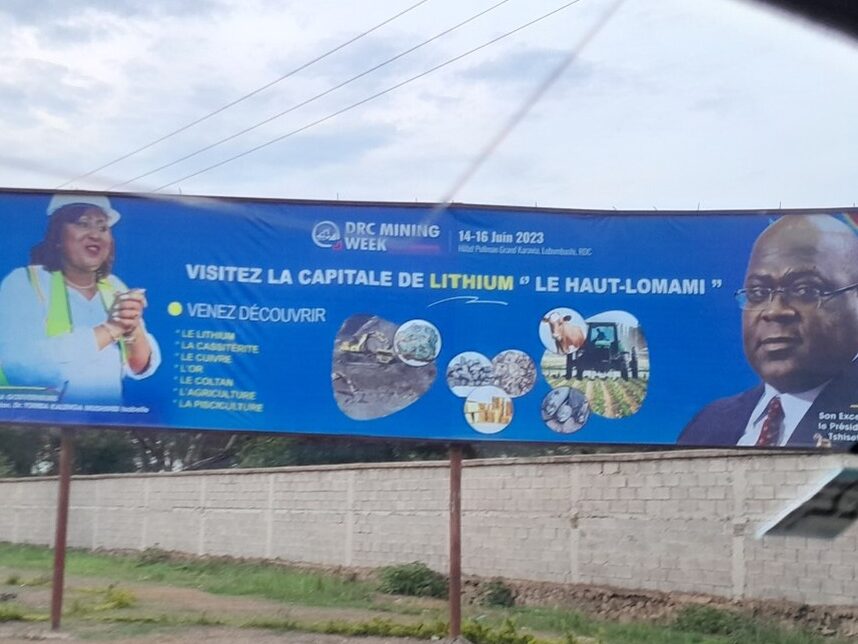
tiptoeing
if it’s a precious mineral, chances are that it’s mined in the DRC

What do you know about The Congo? It suffered terribly for generations under the brutal, exploitative rule of Belgium’s King Leopold and then of Belgium itself. In the 1990s, it was flooded by refugees from the Rwanda genocide, which led to an international African war that killed millions in the DRC. Today, The Congo is famous for its rich deposits of “rare earth metals”—scarce elements essential for the manufacture of advanced electronics, such as phones, missiles, and computers. Warlords still exploit the mines for these—and other—precious minerals, causing much turmoil and pain. If you follow current events, you probably wonder why anyone would dare to go to The Congo.

Spoiler alert: it wasn’t dramatic for us at all. The DRC is a huge country (the world’s 11th-largest), and Lubumbashi turned out to be a sea of tranquility while we were there. We went because we have Lutheran friends there who want to walk together with the WELS. Face-to-face visits show honor and respect, which is why OAT missionaries live in Africa: so that we can regularly visit WELS’ many partners and prospects throughout the continent.

Evidence of God’s Kingdom at Work

In The Congo, we visited MELC worship services at a house church and a large meeting tent. The people of MELC use both French and Swahili, two languages that are mushrooming in their significance for OAT’s current outreach efforts. The pastors of MELC have a heart for sound doctrine and a heart for evangelism. At the end of the visit, OAT and MELC shared a traditional Congolese meal in celebration of our friendship. Our goal is to see each other—and as many people as possible—at the Lamb’s ultimate, eternal feast in heaven!

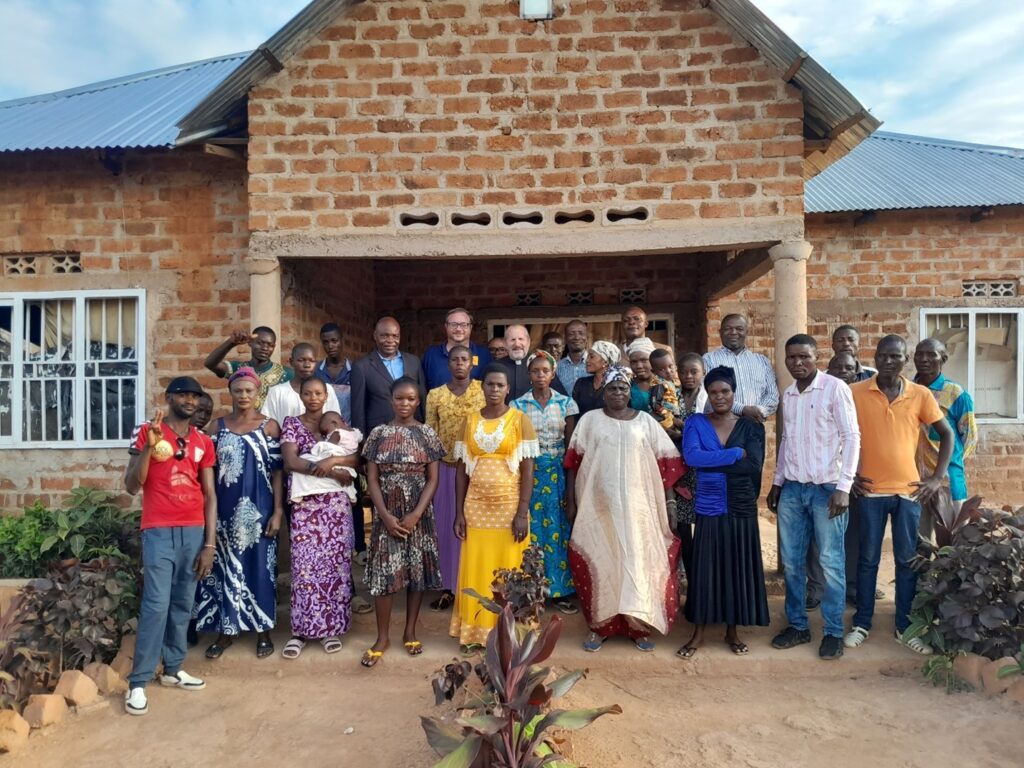
tiptoeing into Congo
After worship and introductions at a MELC house church

The Democratic Republic of The Congo: been there… done that… going back. God willing, OAT missionaries will return in 2024, after the DRC’s elections, to conduct a doctrinal workshop with MELC. Over the following months and years, we hope to grow in our understanding of God’s Word and each other. We are tiptoeing no longer, but taking the plunge. Diving into ministry in a land of people Jesus loves.

Missionary Keegan Dowling lives in Zambia.

Please pray for those working in fields that are ripe for harvest. Share their story, engage with future news, and receive updates. Learn more about our mission fields in Africa and how the Holy Spirit is working faith in people’s hearts at https://wels.net/serving-others/missions/africa


Port of Calling

“Port is where the heart is.” If you’re stitching a saying onto a pillow or a quilt for a sailor, maybe you can use that one. Port is important: It’s where a sailor reconnects with land and with all the comforts to be found there—if only for a short time, until the ship is ready to sail again.


I was once a sailor on the M/V James R. Barker, a thousand-foot-long freighter ship hauling coal and taconite pellets back and forth across the Great Lakes of North America. (Did you know that we have a system of Great Lakes here in Africa, too?) My favorite port-of-call was Duluth, Minnesota. I enjoyed the beautiful book and music shops, as well as Erbert & Gerbert sub sandwiches. However, I had been hoping for more. I had hoped to find a WELS pastor who could visit me and give me Communion. But there was a vacancy: a situation far too familiar to many of us in today’s WELS, some twenty years later.

port of calling featured image
The Port of Douala, as seen from the guest house where the pastors and missionaries met

The Port of Douala is one of the greatest port cities on the continent of Africa. In fact, it is the largest city in the country of Cameroon. When it comes to WELS mission work in West Africa, the Port of Douala actually functions like a spiritual port. When several of us missionaries met with pastors in September, only one of them was from Douala. All the rest of us were “ships”, so to speak, coming to Douala simply for the purpose of meeting around the Gospel of Jesus Christ! Douala—for WELS mission work—is nothing more and nothing less than a “port of calling”.

Missionaries Dan Witte and Dan Kroll were studying and meeting with pastors from three West African synods: Christ the King and All Saints, of Nigeria, and the Lutheran Church of Cameroon (LCC). Because of the multi-dimensional security threats present in the region, for the moment WELS missionaries are not able to travel to Nigeria or to Cameroon, apart from just one city in Cameroon: Douala. Because we couldn’t meet them where they were, our brothers came to meet us in port. Missionary Joel Hoff flew in from Zambia, to give a presentation about the very successful TELL online outreach program, which pastors can use both to teach their congregations and to discover new prospects in their own country. Director of Missions Operations, Stefan Felgenhauer, also flew in from Wisconsin.

port of calling
L to R: Stefan Felgenhauer, Dan Witte, Joel Hoff, Dan Kroll, Keegan Dowling

I (Missionary Keegan Dowling) also ended up in Douala, our port of Gospel calling. I met with yet a different church body: Holy Trinity Lutheran Synod. They hail from a distant part of Cameroon, where there is a violent and dangerous conflict. Yet, a group of leaders trekked down to Douala, so that we could study the Bible together and talk about Holy Trinity’s mission plans. Holy Trinity is not yet in fellowship with WELS, but this is their desire. So, my job is to work with Holy Trinity along a pathway of studies and discussions that the One Africa Team uses to bring church bodies into fellowship.

Missionary Keegan with Pastor Israel, professor at the seminary of the Lutheran Church of Cameroon

An interesting thing about Holy Trinity Lutheran Synod is that many of the leaders and members speak French! In fact, they are our first French-speaking partner church body (although God is blessing our efforts in other parts of francophone Africa, too—stay tuned for future blog posts!) When we “drop anchor” in our “port of calling”, we read the Bible together in French. We discuss the issues in French. And outside of class, walking around the Port of Douala, guess what? Missionaries like Pastor Kroll and I get to practice a lot of real-life French! Each trip adds to our capabilities. It further increases our ability to call: to call our fellow sinners to our common Savior, throughout French-speaking Africa. This is why the Port of Douala is our “port of calling”. And, God willing, it will be joined by more ports of calling, too.

Missionary Keegan J. Dowling lives in Lusaka

Please pray for those working in fields that are ripe for harvest. Share their story, engage with future news, and receive updates. Learn more about our mission fields in Africa and how the Holy Spirit is working faith in people’s hearts at https://wels.net/serving-others/missions/africa