Letters from Crackpots

Rev. E. Eshiett

My wife’s parents were dairy farmers from Wisconsin whose lives revolved around the family, farm, and church. They had a great love for Jesus and his Great Commission. In 1963 my mother-in-law read a story in the Green Bay Press-Gazette about a Nigerian pastor who wanted to know about Christianity in the United States. That article prompted her to raise money in her congregation to purchase a bicycle for his ministry, and later she sent him some clothes. In a letter he replied, “I am really fat and would need to reduce if it was within my capacity. The raincoat did not fit me. It is still very needful since my wife has begun to use it.” Over the next three decades she maintained correspondence with Rev. E. Eshiett, a pastor in the Evangelical Lutheran Church of Nigeria.


The Evangelical Lutheran Church of Nigeria came into existence in the 1930’s following contacts between a Nigerians from the Ibesikpo tribe and representatives from the Lutheran Church Missouri Synod. The Ibesikpos had been part of a Presbyterian church body dominated by people of the Qua Iboe tribe, but did not feel that they were being treated fairly. The Missouri Synod and the Wisconsin Synod partnered to support missionaries in Nigeria under the supervision of the Missionary Board of the Synodical Conference.

After the breakup of the Synodical Conference in 1961, the Evangelical Lutheran Church of Nigeria remained in fellowship with the Missouri Synod. However, the Lutheran members of another Nigerian tribe, the Annang people, felt that they were receiving second-class treatment in the Ibesikpo-dominated church body. In 1960’s, several Annang Lutherans traveled to the United States to search for a new Lutheran partner. In 1969 the Lutherans living in the Annang majority territory of Abiaokpo established their own church body, Christ the King Lutheran Church of Nigeria.

As the only ordained pastor in the new church body, Rev. Eshiett was sent to the United States to pursue contacts with the Lutheran Churches of the Reformation in 1971. Eventually Rev. Eshiett reached out to Rev. Edward Greve, a former WELS missionary who had taught in the Synodical Conference’s Nigerian seminary. It was decided that he should attend classes at Wisconsin Lutheran Seminary for a short time. While he was there, Eshiett was able to meet my wife’s parents and see their dairy farm in person. He wrote, “Farmers [in the USA] themselves are very rich.” When my mother-in-law responded that American farmers have to pay mortgages he wrote, “I did not know that these men are debtors. However, it is always good to be a good debtor, although debt can disunite men with Christ.” He also asked my mother-in-law about her newborn calves and yearling steer.

In 1981, WELS and CKLCN declared fellowship. Over the next decade, WELS sent missionaries on short-term teaching trips to prepare pastors for Christ the King Lutheran Church of Nigeria. Rev. Eshiett helped train seminary students – and then in 1986 he resigned from his post and left CKLCN. In his last letter to my mother-in-law he wrote, “How are you faring with your farm? Every moment of my life I feel I am nearer eternity than before…I need your prayers daily.” He was a broken clay pot with Christ’s treasure in his heart (2 Cor. 4:7).

It is a testimony to God’s power and grace that he uses flawed humans – pastors, missionaries and laypeople – to build up his church. We stumble in our mission strategy, we make short-sighted decisions, and sometimes our helping hurts others. In spite of all our missteps God pours living water on his church and it blooms with the fragrant aroma of the Gospel. God used Rev. Eshiett to lay the foundation for his church in Nigeria, and he used my mother-in-law’s letters to strengthen him in his ministry. And God is using cracked pots like you and me to build up his church all over the world!

Missionary John Roebke lives in Malawi

Please pray for those working in fields that are ripe for harvest. Share their story, engage with future news and receive updates. Learn more about our mission fields in Africa and how the Holy Spirit is working faith in people’s hearts at https://wels.net/serving-others/missions/africa


Who’s in Charge Here?

I wish I would have kept track of the number of times I said to myself, “Ok, I guess we are not in charge of these matters.”

In December of 2019, I was blessed to visit Uganda for a teaching trip on behalf of the One Africa Team Outreach Committee.  I accompanied Missionary John Hartmann for the third meeting with a group of Pastors, Evangelists and other church leaders. Since this was my first visit, I wasn’t sure what to expect.  I was pleased with what I saw there -a solid and serious group continuing to hunger and thirst for the true righteousness only Jesus can provide (Matthew 5:6).  These people were eager to know the truth and see how those teachings fit into real life.  Most of them had experience in the church that left them thinking “there should be more to what I’m hearing and seeing from the leaders of my church body.”


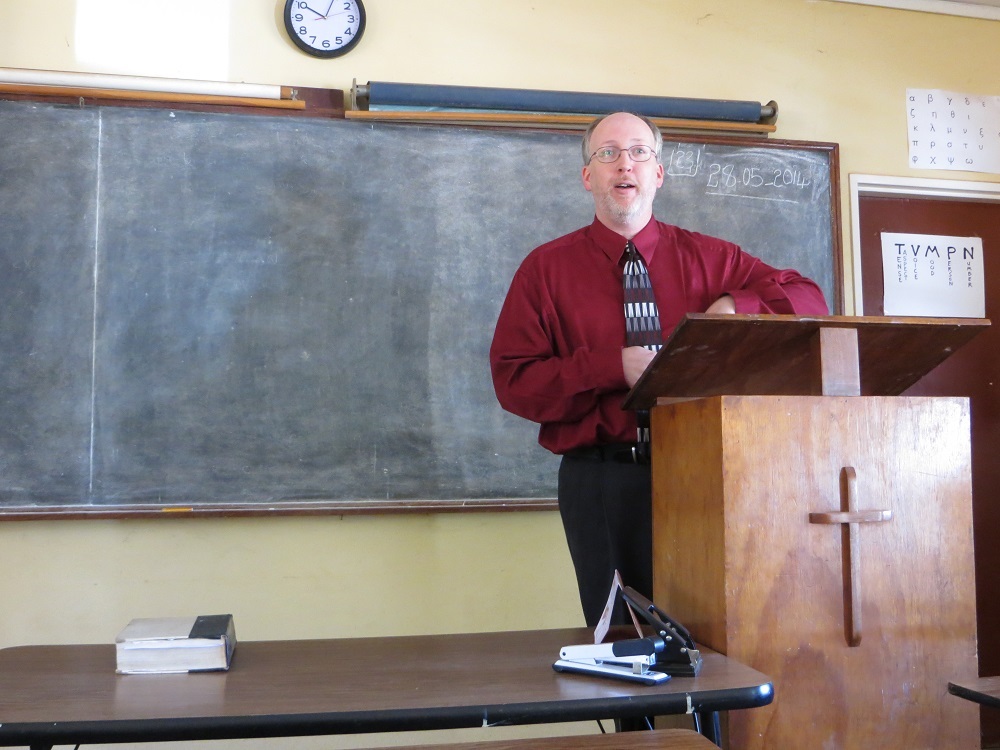
Pastor Hartmann teaching with a lively lecture method

One of the problems we have run into here in Africa is the overwhelming temptation to bring our own American logistical organization into the African contexts in which we work.  Since most these logistics are NOT doctrinal, we are currently making a conscious effort to avoid setting up American methods and standards for non-biblical matters.  It will be more truly “African” if our new brothers take ownership of those logistical matters and our missionaries focus more specifically on the doctrinal matters as they are presented in Scripture.  In order to do that, our WELS missionaries must remind themselves regularly to “go with the flow” because we are not in charge of these matters.

Plenty of various foods for us to enjoy

Here are some examples to help us remember who
was and was not in charge of this program:

  • Because one of our planes was late getting into Entebbe, we were not able to stay where we had planned on the first night.
  • On the first full day, we waited about 4 hours on the side of the road for a drive shaft to replace the one that had fallen off the car.
  • Since food is such an important part of the culture, we ate twice on our arrival: 10pm and midnight.  We are not accustomed to such hospitality, so it was a good reminder that we are not in charge of these matters.
  • “Starting teaching time” = “when everybody is present,” by somebody else’s evaluation. We learned flexibility.
  • We were late for Sunday worship at Nairika Congregation because of a broken wheel, due to incessant rain and an odd stone that appeared in the road.  The members were patient, waiting until 2 pm for us to arrive.  Maybe they also recognized that they were not in charge of the situation.  Our return “home” was delayed by 1) getting stuck in the mud and 2) a broken-down sugar cane truck on a one-lane mud road.  We made it back to Pastor Musa’s house in God’s (good) time, since he himself (God) was in charge of these things.
Legs sticking out from under the vehicle became a fairly common sight for us in Uganda
Our “kitchen” and other support staff did a great job!

Rather than being in charge, the members of the One Africa Team are working hard to fit into the program of Obadiah Lutheran Synod there in Uganda.  We came to do the teaching.  The what and the how of that teaching activity is absolutely in our hands (unless God himself intervenes again), and we consider ourselves very much blessed to be subject to the culture and methods of our brothers where those cultures and methods do not conflict with God’s will.  We are not in charge of any other logistics regarding when and where that our teaching would take place.  Pastor Musa, together with Pastor Edward, Pastor Isaac and Pastor Wilberforce were taking ownership of this program by making decisions about those logistics. It was a great blessing to see these men take control of their own church body while we filled them with the Lord’s good counsel to guide their hearts.  We are planning for three more visits in the coming year or so, to build a strong, Ugandan-owned and operated church body.

Small groups keeps the learning in the hands of the learners for culture and language

Dan Kroll lives in Malawi and serves as the OAT
liason to West Africa

Please pray for those
working in fields that are ripe for harvest. Share their story, engage with
future news and receive updates. Go to this link to learn more about our
mission fields in Africa and how the Holy Spirit is working faith in people’s
hearts  
https://wels.net/serving-others/missions/africa


Prepared to Serve

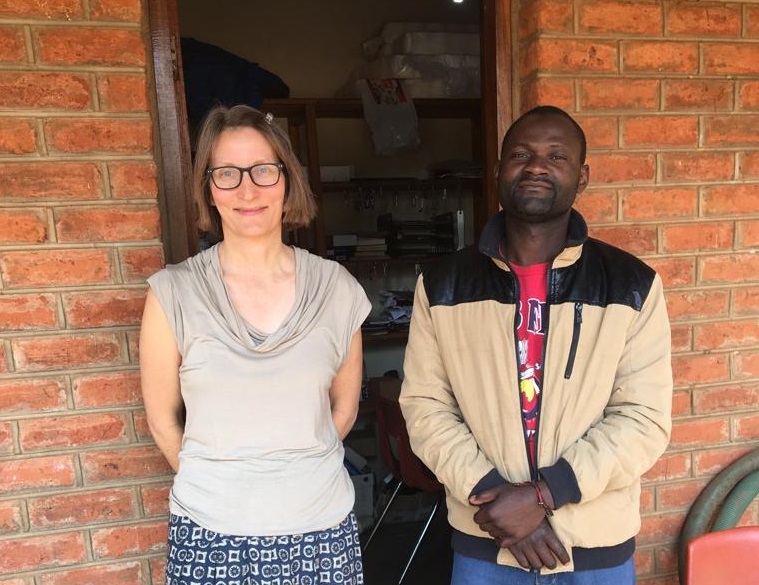
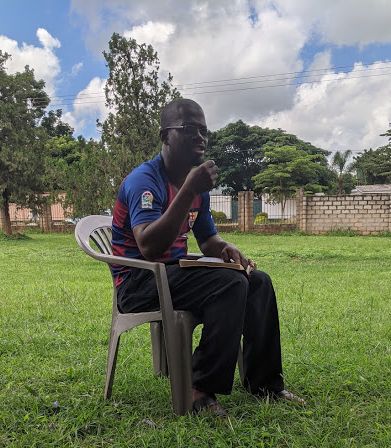
Chibikubantu Simweeleba, the newest Zambian national professor

God has blessed each and every one of us through the faithful ministry of our pastors. They have helped us to gain a much greater understanding of God and his will for us through their preaching and teaching of his Word. Every church needs a pastor who understands the Bible’s complex teachings and can explain them in a simple way. Church members need a pastor who can apply the truths of Scripture to their lives in a loving, Gospel-centered way. Pastors need to be well-prepared before they begin to serve, because the eternal welfare of the souls under their care is at stake.


God has blessed the congregations of the Lutheran Church of Central Africa – Zambia Synod with church workers who have been thoroughly prepared in worker training schools that were established by WELS missionaries in the 1960’s, and have been staffed by both WELS missionaries and by Zambian national professors. The current teaching staff at the Lutheran Seminary in Lusaka is made up of 3 Zambians and 3 Americans. This is the story of Chibikubantu Simweeleba, the newest Zambian national professor.

Upon graduating from the Lusaka Seminary in 2008, Simweeleba was ordained and assigned to serve Sinda-Chiyanjano parish, a cluster of rural congregations located in Zambia’s Eastern Province. In 2015, Rev. Simweeleba received a call to serve Mt. Sinai Lutheran Church in the city of Ndola, located in the Copper Belt, the most important copper producing region of Zambia near the border with the Democratic Republic of Congo. As a parish pastor, Rev. Simweeleba was involved in helping prepare candidates for the LCCA’s worker training program by leading classes in the Theological Education by Extension (T.E.E.) program (see https://welsfriendsofafrica.com/t-e-e-ing-up-students-for-success/ for more background).

The Lord saw fit to give Rev. Simweeleba synodical duties in addition to his congregational responsibilities. From 2010-2019 he served alternatively as the LCCA-Z Mission Board Chairman, Synodical Vice Chairman, Secretary of the LCCA-Z Board of Control (akin to the WELS Synodical Council), and finally as the Chairman of both the Board of Control and the Joint Worker Training Board. These roles have provided him experience in various aspects of leadership skills, planning, and administration for use in the Seminary as an instructor. Additionally, Rev. Simweeleba holds a BDiv degree from the Greater Africa Theological Studies Institute (GRATSI), a post-graduate program for pastors in Zambia and Malawi, and he is currently pursuing an MTh degree with GRATSI.

In addition to his professional skills, one of the greatest blessings that Rev. Simweeleba brings to the Lutheran Seminary in Lusaka is that he has an insider’s understanding of his students’ lives and can relate to them much more naturally than his American counterparts. He is from the Tonga tribe of Southern Zambis, which makes up about 14% of the population of Zambia. One of his Zambian colleagues at the Lutheran Seminary is from the Chewa tribe in the Eastern region, and the other is from the Nkoya tribe in the West. The LCCA Z has congregations spread all over the country, and the melting pot of the Lusaka Seminary gives students the opportunity to learn to appreciate cultures other than their own.

Rev. Simweeleba will begin his service at the Lutheran Seminary by teaching courses on Church History and Isagogics (Bible History). He will free up his fellow Zambian professor Rev. David Kamwata to prepare taking over the duties of teaching Biblical Greek and Hebrew from Dr. Ernst R. Wendland.

In the next several years some significant changes will be taking place in the shared worker training program of the LCCA Zambia and the LCCA Malawi. There is talk of each synod establishing its own separate program for training pastors. Two of the current American professors in Lusaka are nearing the age of retirement. One Africa Team is exploring the creation of the Confessional Lutheran Institute, a new continent-wide initiative that would not only offer post-graduate education but also consulting services for national synods’ worker training programs and enhancement of the skills of current pastors through professional development programs. 

With these changes on the horizon, gifted men like Rev. Simweeleba will be essential to the success of preparing the next generation of faithful pastors. Pastor Simweeleba hopes that “LCCA pastors will be able to defend and proclaim the true teaching of the Word of God without fear. As Seminary instructors we hope to see [current] LCCA pastors who won’t doubt or regret the kind of training others will have received but to envy it.”

Missionary John Roebke lives in Malawi and is the Communications Director for One Africa Team

Please pray for those working in fields that are ripe for harvest. Share their story, engage with future news and receive updates. Go to this link to learn more about our mission fields in Africa and how the Holy Spirit is working faith in people’s hearts  https://wels.net/serving-others/missions/africa