“Come in, come in! I want to show you something!”
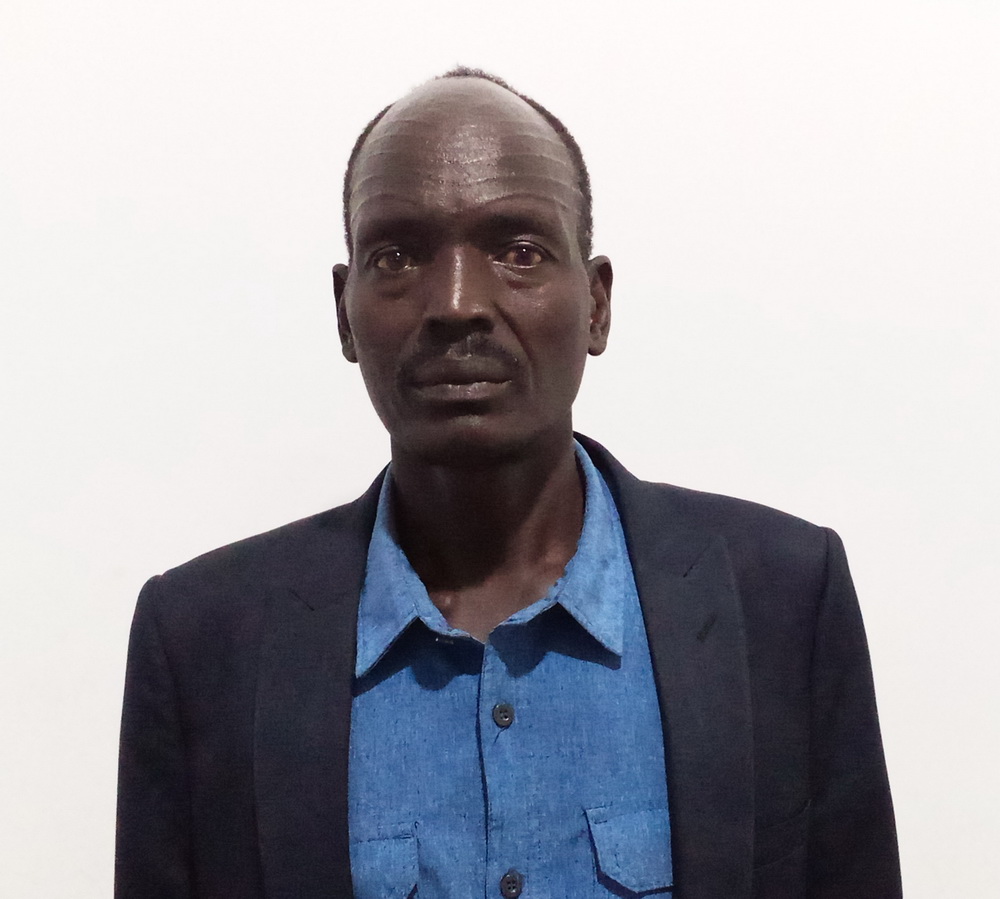
Pastor Willard Chipembere emphatically invited us into the parsonage at Chisomo, Thyolo (31 May 2021). He was excited. He couldn’t wait to show us something in the house. Because I had been there before, I had an inkling of what it was going to be. Walking down the hallway we came to a room from which came a lot of chirping. Chickens! Not just one or two but 100! Pastor Chipembere picked up one tiny chick in his hand and presented it to us with great joy. He then continued to explain more about his chicken business, and with a wave of his hand, he showed us all that was under his roof. Mind you, these were not just in an outbuilding, they were in his home. His face shone. Eyes glimmered. Voice, exuberant. He was filled with great joy.
I have known about his passion for chickens for years now. Though I didn’t get a picture of him that day with the little chick in his hand, I did some years ago with ones that were much bigger and more mature than chicks at the time. After showing us his pride and joy, we then hit the road. We were on our way to a Professional Development Class at the base of Mount Mulanje in the Southern Region of Malawi.
The Word and his Work
Five of us got together to work on learning about and designing engaging Bible Studies. Along with the other participants, Pastor Chipembere designed and presented his draft Bible Study to our pastors’ group. As eager and joyful as Pastor Chipembere had been to tell us about his chickens, he was even more excited to eventually present his newly crafted Bible Study to the church councilmen of his three congregations. He had something especially important and relevant to share. And he took it seriously. In fact, at the class, he wrote on paper what was already inscribed on his heart: “It is my responsibility as a pastor to teach Bible Studies!”
He not only took his work and responsibility seriously but also joyfully. As he was working on designing his Bible Study, he dug into 1 Timothy 3:1-10 and Ezekiel 11:1-12. He wanted to highlight the Godly qualities and lifestyle of a leader in the church.
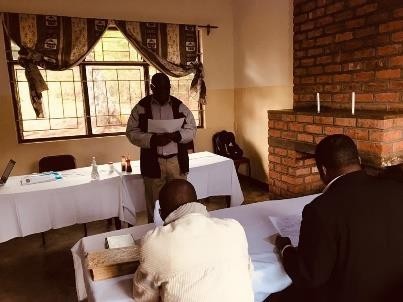
Pastor Chipembere looked forward to reviewing our course material, reading deeper, and reworking his draft Bible Study; he especially was excited to finally present it to the congregation elders. In his hands was not a chicken to eat – but a Bible study to digest and share. After the class was over, we drove to Pastor Chipembere’s house and dropped him off. No doubt his family – and his feathered friends – were excited to see him.
The News and the Questions
Several days later, on Wednesday, 9 June 2021 the news was spreading as quickly as it came: Pastor Chipembere was called home to heaven. On that day he had taken his motorcycle for a ride. He was suddenly killed in a terrible traffic accident. A head-on collision. The funeral was the next day (10 June 2021).
This time when I saw him, I was actually viewing him, as were the other funeral attendees. This time his face was lifeless. Eyes closed. Voice silenced. But the church? Deafening with the sounds of grief. I can only imagine the questions swirling around in the pained hearts of the family, friends, congregation members, and community:
Was this God’s will? (Did God will him to die this way?)
Why him? (He was a pastor, ordained in 2006, who devoted his life to the full-time gospel ministry!)
Why now? (He was only 51 years old and was supporting a family).
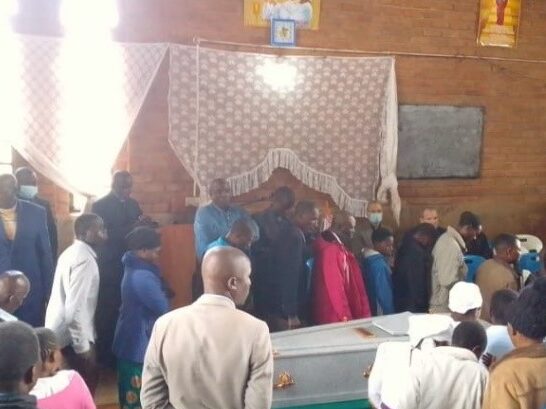
I don’t know all the questions the family and others were asking, but don’t we, too, wonder how to answer all the questions that do get asked by people who have endured similar grief and pain? How does one offer comfort? The same way Pastor Chipembere would have done: with the Scriptures and the sure promises of God.
JESUS CHRIST: The Answer and the Comfort
Though at times in the church and at the outside funeral gatherings there were sounds of mourning and pain, there were also words and hymns of Hope and Promises and Good News: Jesus was the Answer and the Comfort!
“I am the resurrection and the life. He who believes in me will live, even though he dies; and whoever lives and believes in me will never die.” (John 11:25).
“Where, O death, is your victory? Where, O death, is your sting? The sting of death is sin, and the power of sin is the law. But thanks be to God! He gives us the victory through our Lord Jesus Christ!” (1 Cor.15: 55-57).
“And we know that in all things God works for the good of those who love him, who have been called according to his purpose…” (Romans 8:28).
God’s Pride and Joy
During the funeral, it hit me: while we were grieving the loss of an LCCA pastor and while the family was mourning the loss of a husband/father, heaven was celebrating a homecoming! Not a loss, but a gain!

I can just imagine Jesus enthusiastically ushering Willard Chipembere into his House with a wave of his scarred hand, “Come in! Come in! I want to show you something…” Or better yet, “someone.” Here’s Paul. And here’s Elijah. Meet Lydia. And, oh, let me introduce you to James and John. And here’s…“well, here’s… my Father!” Or maybe with every newcomer to heaven He will begin with His Father!
“To him who is able to…present you before his glorious presence without fault and with great joy!” (Jude 24)
Stunning. Jesus has presented each and every one of his servants to his Father. Father, here’s Willard Chipembere! Look at Jesus. His face shining. Eyes glimmering. Voice exuberant! Jesus filled with great joy presenting yet another one of his blood-redeemed brothers. This time…Willard Chipembere.
Presented without fault. (Sins paid for by Jesus) Presented with great joy. (What an introduction!) Presented by God Himself who knows what it’s like to die a terrible death. And did so willingly, taking our own faults upon Himself. What Jesus achingly uttered about Jerusalem years ago he still desires today: “How often I have longed to gather your children together, as a hen gathers her chicks under her wings…” (Matthew 23:37)
One day it will be your turn and your time to finally reach home. To join the ultimate gathering. A longing fulfilled. Ushered in by Jesus. And as Jude (verse 24) assures, Jesus will…Present you…with great joy.
Missionary John Holtz lives in Malawi
Please pray for those working in fields that are ripe for harvest. Share their story, engage with future news and receive updates. Learn more about our mission fields in Africa and how the Holy Spirit is working faith in people’s hearts at https://wels.net/serving-others/missions/africa